
National Assembly passes amended Law on Drug Prevention and Control
With 440 out of the 444 present deputies voting in favour, accounting for 93.02%, the National Assembly (NA) passed the amended Law on Drug Prevention and Control, on the morning of December 10, 2025.
11/12/2025
00:00
The law comprises eight chapters and 56 articles, including 11 newly added articles, 38 amended and supplemented articles, 10 annulled articles and seven retained articles.
It will take effect from July 1, 2026.

Speaking at the session, Minister of Public Security General Luong Tam Quang stated that the revised law represents a comprehensive overhaul, having institutionalized the Party and State’s guidelines on streamlining and restructuring the organizational apparatus of the political system, while further improving the legal framework for preventing and combating drug-related crime. It has also ruled out the difficulties and obstacles that competent agencies met in exercising State management of drug rehabilitation and post-rehabilitation management.
Regarding electronic supervision measures applied to persons after rehab, the Minister noted that the draft law has supplemented provisions to clearly define the scope of authority of competent agencies, as well as the responsibilities of supervised individuals. The law authorizes the Government to decide on the persons subject to supervision and the devices to be applied. The Government is also responsible for setting out the condition, duration, procedure and mechanism for handling violations related to the application of electronic supervision.
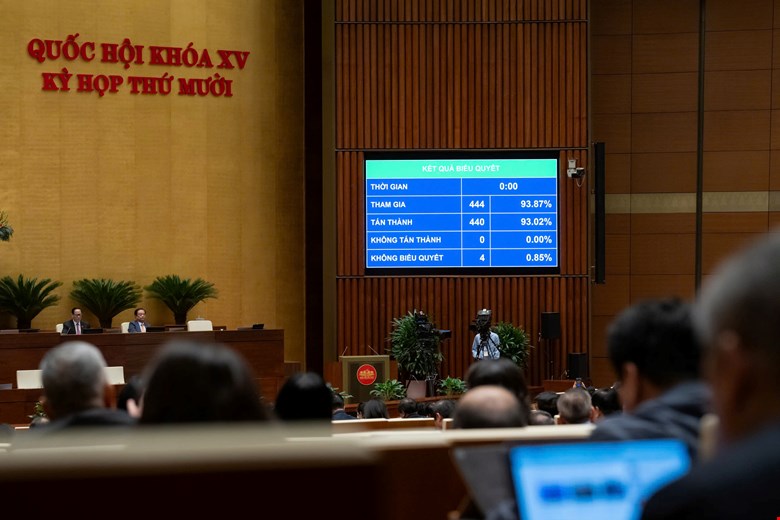
The Ministry of Public Security has seriously taken into account NA deputies’ opinions while revising the draft law.
The draft law says, in case a person under rehab is prosecuted and sentenced to imprisonment, that person shall serve the sentence. If he/she is released before the end of his/her rehab program or his/her post-rehab supervision time, he/she will be sent to a rehab center or put under supervision until his/her rehab or post-rehab supervision mandate ends.
Regarding compulsory rehabilitation for individuals aged 12 to under 18, the Government proposed retaining the current provision, according to which this group shall be sent to reform schools for compulsory rehabilitation in order to ensure the protection of minors, particularly their right to access mainstream education while undergoing rehabilitation.
Print
Chia sẻ
Latest news


Most read news of the week